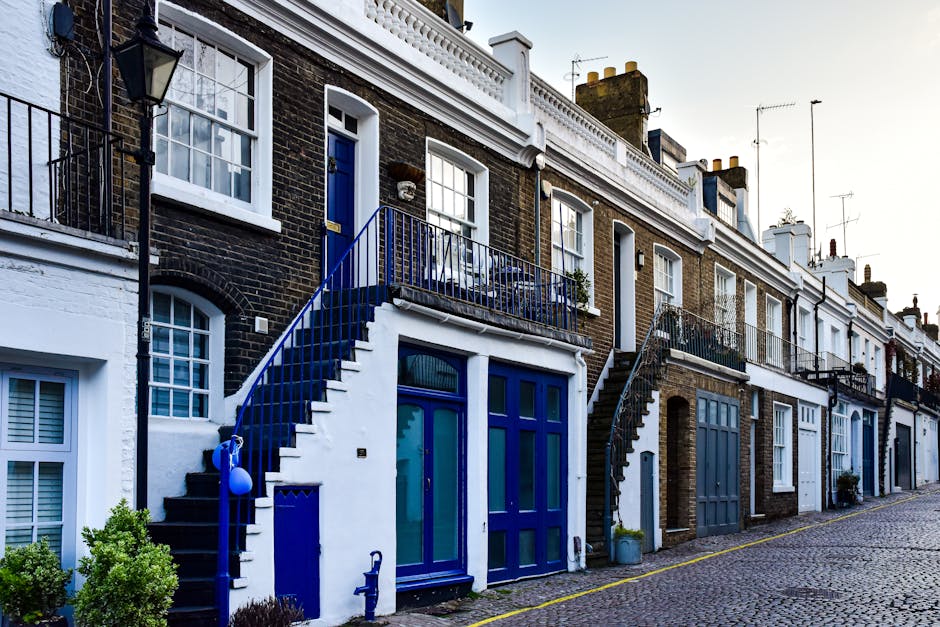
Westbourne Grove narrow access removals Bayswater tips: a practical guide for tight London moves
If you are planning a move around Westbourne Grove, you already know the issue is rarely the boxes themselves. It is the stairs, the pavements, the shared entrances, the parked cars, the awkward corners, and that one sofa that suddenly seems to have grown overnight. Westbourne Grove narrow access removals Bayswater tips are about handling those real-life constraints without turning moving day into a scramble. This guide breaks down what narrow access really means, how to plan a smoother move in Bayswater, and the small decisions that make a big difference when space is tight.
Whether you are moving from a flat above a shop, a mansion block with a narrow stairwell, or a basement property with a tight street approach, the aim is the same: protect your belongings, avoid delays, and keep the day calm enough that you can actually breathe. Let's get into the useful stuff.
Why Westbourne Grove narrow access removals Bayswater tips Matters
Narrow access changes almost everything about a move. In a wider suburban property, removal teams can often work in a straight line: front door, vehicle, loading ramp, done. Around Westbourne Grove and the wider Bayswater area, the route is often less forgiving. You may be dealing with controlled parking, small entry halls, tight turnings, staircases with awkward landings, or lifts that are useful but not quite large enough for bulky furniture.
That matters because a move is not just about lifting. It is about sequencing. If a wardrobe cannot be angled through a corridor, or if a sofa needs to be carried down three flights without blocking the stairwell, the whole day slows down. Even one misjudged item can create avoidable damage to walls, doors, flooring, and the item itself. Nobody wants a lovely painted banister scuffed on the final lap out. Bit of a nightmare, really.
Good planning also matters for neighbours and building management. In mixed residential streets, especially in period conversions and mansion blocks, a move that is noisy, late, or badly parked can create friction fast. A little local awareness goes a long way. In practice, that means thinking about access as seriously as you think about packing.
Expert takeaway: the smaller the access, the more important it is to plan the route, the vehicle, the packing method, and the timing together rather than as separate tasks.
How Westbourne Grove narrow access removals Bayswater tips Works
The process starts before moving day. A careful removals plan for narrow access should begin with a proper access check: entrances, stair width, lift dimensions, parking distance, and any restrictions on loading times. If you are using a professional team, they will normally want to know whether the move involves a flat removals scenario, a full house move, or a smaller man and van type job. The right setup changes depending on the property and the load.
Next comes packing for access, not just for storage. That means using boxes that are strong, stackable, and not overfilled. It also means making sure furniture can be dismantled where possible. In tight bays and corridors, a flat-packed bed or a removed table leg can be the difference between a smooth carry and a half-hour wrestling match at the top of the stairs. We have all seen that moment where someone says, "It should fit," and the hallway answers, no, absolutely not.
On the day, timing matters more than people expect. If the road is busier at school-run time or if building access is shared with other residents, a slightly earlier slot can make the whole operation easier. Good teams also protect the route inside the building, using floor covers, corner protection, and blankets where needed. That is not overkill; that is sensible care.
Finally, a sensible crew will adapt the load plan to the access. Sometimes a smaller removal van is simply a better fit for residential streets and tight loading conditions than a larger truck. In other cases, especially for bigger households, a larger moving truck may still work if parking and access have been planned properly in advance.
Key Benefits and Practical Advantages
Planning narrow access properly gives you more than peace of mind. It improves the move in very concrete ways.
- Less risk of damage: careful route planning reduces scuffs, knocks, and crushed corners.
- Faster loading and unloading: a clear plan prevents unnecessary back-and-forth.
- Better protection for shared spaces: helpful in apartment blocks, converted houses, and managed buildings.
- Lower stress on moving day: fewer surprises usually means fewer delays and less frustration.
- Smarter vehicle choice: the right van or truck size can save time and parking headaches.
- More accurate pricing: access details help removal teams quote more realistically from the start.
There is also a subtle benefit that people overlook: narrow access planning forces clarity. Once you have measured the doors, checked the stair turns, and decided which items need dismantling, the move becomes more manageable. That simplicity is worth a lot on a busy London street.
Who This Is For and When It Makes Sense
This kind of planning is especially useful if you are moving from a flat above ground level, a basement property, a listed building with awkward internal access, or any address where the vehicle cannot park directly outside the entrance. It is also relevant if you have large or delicate items such as wardrobes, mirrors, artwork, or instruments.
If you are moving a smaller load and need flexibility, a man and van arrangement can be a sensible option. For a more structured move with more furniture, a full removal services package may be more suitable. And if you are moving household contents with a particular need for protection and careful handling, house removals support may be the better fit.
It also makes sense if time is limited. Maybe the lease is ending on Friday, the lift is booked by another resident, and the weather looks frankly awful. In those cases, having a practical plan for narrow access is not optional; it is the thing that keeps the day from wobbling.
Step-by-Step Guidance
Here is the simplest way to approach a narrow access move in Bayswater without missing the important bits.
- Survey the access first. Measure doorways, stair widths, ceiling heights, and any tight turns. Do not guess. Guessing is where problems begin.
- Check the parking situation. Look at loading restrictions, resident bays, and whether the vehicle will need to stop a short walk away from the entrance.
- List the awkward items. Sofas, beds, American-style fridges, mirrors, and pianos deserve special attention. If you have a piano, specialist handling is wise; piano removals is not just a luxury, it is sensible risk control.
- Decide what can be dismantled. Furniture that comes apart cleanly is easier to move through narrow passages. Keep screws and fittings in labelled bags.
- Use the right packing materials. Strong boxes, wrapping, tape, blankets, and wardrobe protection all help. If you want help with the materials and method, packing and boxes support can be a practical shortcut.
- Protect the property route. Cover floors, guard corners, and keep stairwells clear. That benefits everyone.
- Load in the best order. Put the heaviest and most awkward items in first if the route allows it, then stack the lighter items around them safely.
- Leave a buffer for the unexpected. A building lift may be slower than expected, or a neighbour may be using the only sensible parking space. A little patience here saves a lot of drama later.
One useful habit: do a quick final walk-through before the vehicle leaves. You would be surprised how often chargers, keys, and small bags hide in the last room. Moving day has a way of eating small objects. Mysteriously, and repeatedly.
Expert Tips for Better Results
The following tips come from the sort of practical detail that often separates a smooth move from a messy one.
- Use slimmer boxes for books. Heavy boxes become impossible to carry safely on stairs, especially when turning corners.
- Label by room and priority. Mark boxes that must go in first at the new place so the unloading order is sensible.
- Photograph tricky furniture before dismantling. It makes reassembly faster and less annoying. Truth be told, this saves more time than people expect.
- Keep a clear "no-pack" bag. Put documents, meds, keys, chargers, and essentials in one bag you can keep on you.
- Tell the team about every access oddity. A low ceiling in the basement or a step hidden behind a side door is exactly the kind of detail that matters.
- Consider temporary storage if space is tight. If your move dates do not line up perfectly, storage can prevent pressure on the day and keep you from rushing the packing.
If you are moving out of a flat and the building has no easy lift access, it may help to treat the move like a sequence of small tasks rather than one big event. That is the mindset shift. One box, one corridor, one landing at a time.
Common Mistakes to Avoid
Narrow access removals tend to go wrong in predictable ways. Luckily, most of them are avoidable.
- Underestimating furniture size. Measuring a sofa with your eyes is not enough. Measure it properly, including height at awkward angles.
- Forgetting the route inside the property. A door may be wide enough, but the corner after it may not be.
- Leaving packing too late. A rushed box is more likely to split or be overloaded.
- Ignoring parking reality. If the van has to park two streets away, the move will take longer. Simple as that.
- Not warning about delicate items. Mirrors, glass tops, and artwork need specific handling.
- Choosing the wrong vehicle size. Bigger is not always better in narrow Bayswater streets.
- Assuming the lift will solve everything. Sometimes the lift is too small, too slow, or not available for the full move window.
Another common one: packing boxes too tightly because "it'll be fine." That usually becomes "it was not fine" once the box needs to be carried upstairs. Leave a little give. Your back will thank you.
Tools, Resources and Recommendations
You do not need a huge toolkit, but the right basics make narrow access removals much easier.
- Measuring tape: useful for doors, hallways, stairs, and large furniture.
- Marker pens and labels: essential for room-by-room packing.
- Furniture blankets and wraps: protect corners and surfaces.
- Strong tape and box cutters: keep packing secure and manageable.
- Door and floor protection: sensible if the move passes through shared or finished spaces.
- Basic dismantling tools: screwdrivers and hex keys are often enough for beds and tables.
For packing support, some customers prefer to handle the move themselves and just get help with the heavy lifting, while others want a fuller service. If you need a more complete setup, packing and unpacking services can remove a lot of the pressure. For smaller or more agile moves, a removal van often fits narrow streets and short access routes neatly.
If you are comparing providers, look beyond the headline price. Ask whether they ask about access, whether they discuss insurance and safety, and whether they explain how they handle stairs or tight loading points. A good provider should be interested in the awkward details, not just the easy ones. You can also review insurance and safety information and health and safety policy details to understand how the company approaches risk.
Law, Compliance, Standards, or Best Practice
For most domestic moves, the most relevant "compliance" issues are practical rather than heavily legal. You still want to follow building rules, parking restrictions, and safe working practices. In London, that usually means respecting loading arrangements, avoiding obstruction, and coordinating with building management where applicable.
If you live in a managed block, check any move booking rules, lift reservation requirements, and permitted hours. Some buildings want advance notice, and for good reason: shared spaces get busy quickly. It is also wise to keep pathways clear and avoid blocking fire routes. That is just basic best practice, and it protects everyone on site.
Safety standards matter too. Lifting should be done carefully, with enough people for the job, and with proper handling of heavy or awkward items. This is one area where experience genuinely helps. A move should not rely on bravado and a prayer. There is a better way.
If you are booking a professional service, look for clear documentation around terms, payment, and complaint handling. Pages such as terms and conditions, payment and security, and complaints procedure give you a better sense of how the business is run. For general background, the about us page can also help you judge whether the company feels transparent and easy to work with.
Options, Methods, or Comparison Table
Different move setups work better depending on the access, item count, and timing. Here is a practical comparison.
| Option | Best for | Strengths | Limitations |
|---|---|---|---|
| Man and van | Smaller flats, lighter loads, flexible timing | Agile, often easier in narrow streets, good for short-notice moves | Less suited to larger households with lots of furniture |
| Full removal services | Medium to large home moves | More structured, better for multiple rooms and heavier items | May need more coordination if access is very tight |
| Small removal van | Residential streets with limited parking or low clearance | More manoeuvrable, less awkward in Bayswater side roads | May require more trips if the load is large |
| Moving truck | Bigger moves with planned parking and clear access | Good capacity, efficient for larger inventories | Can be harder to position near narrow entrances |
| Storage plus staged moving | Moves with timing gaps or access complications | Reduces pressure, helps split the move into manageable parts | Extra coordination and short-term storage cost |
There is no single perfect method. The right choice depends on what you are moving and how awkward the access is. A smaller vehicle can be the smarter move in a cramped street. A larger team can be the smarter move in a building with lots of stairs. Sometimes it is a bit of both.
Case Study or Real-World Example
Picture a typical Bayswater flat move near Westbourne Grove: a two-bedroom property, first floor, narrow staircase, and a street where parking is available only after a short wait. Nothing dramatic. Nothing impossible either. But the access details matter.
In a setup like this, the successful move usually starts with a pre-visit or at least a very careful phone briefing. The sofa is checked for dimensions. The bed frame is dismantled in advance. Boxes are labelled by room. The biggest mirror is wrapped separately. The customer keeps a small essentials bag with documents and chargers. Simple things, but they stack up.
On moving day, the team uses a smaller vehicle so the load can be positioned more easily near the property. The stairwell is protected, and each item is carried with a clean route in mind. Because the furniture was prepared properly, the team does not have to force anything around the landing. The move is still physical, obviously. You feel it in your arms by lunchtime. But it is orderly, and that is the point.
The biggest win in a move like this is not speed for speed's sake. It is avoiding the kind of slow, frustrating mistakes that cost time later. One jammed wardrobe can delay everything. One extra tape of planning can save an hour. That is the real-life maths of narrow access removals.
Practical Checklist
Use this checklist before moving day. It is basic, but basic done well is powerful.
- Measure doors, hallways, stairs, and any tight corners.
- Confirm whether the lift is usable and whether it fits larger items.
- Check parking, loading restrictions, and walking distance from the vehicle.
- List furniture that needs dismantling.
- Separate fragile or high-value items for special handling.
- Pack heavy items into smaller boxes.
- Label every box with room and priority.
- Protect floors, walls, and stair edges where needed.
- Keep essentials and documents with you.
- Tell the removal team about any awkward access points in advance.
- Review payment, insurance, and service terms before the day.
- Make sure someone is available to answer access questions at both ends.
If you can tick those off, you are already ahead of most rushed moves. Honestly, that bit of prep makes a big difference.
Get a free quote today and see how much you can save.
Conclusion
Westbourne Grove narrow access removals Bayswater tips are really about one thing: turning a constrained, potentially awkward move into a controlled one. Once you account for staircases, parking, vehicle choice, packing method, and building access, the whole process becomes far more predictable. You cannot remove the narrow hallway or magically widen the street, but you can absolutely make the move feel easier.
The best approach is calm, detailed, and practical. Measure properly, pack thoughtfully, choose the right vehicle, and do not be shy about flagging awkward access early. That is how you avoid damage, delay, and unnecessary stress. And if you are moving in and around Bayswater, that local awareness is worth its weight in boxes.
Take it step by step, keep the plan simple, and give yourself a little breathing room. Moves do get easier when the details are handled well.
Frequently Asked Questions
What makes Westbourne Grove narrow access removals different from a normal house move?
The main difference is the access. Narrow stairs, limited parking, tight entrances, and shared building spaces all add complexity. The move needs more planning around route, vehicle size, and packing.
Should I choose a removal van or a moving truck for a Bayswater move?
It depends on the size of the load and the access. A removal van is often easier in narrow streets and tighter spaces, while a moving truck is better for larger jobs if parking and access are workable.
How do I know if my sofa will fit through the stairwell?
Measure the sofa and the tightest parts of the route, including corners and landings. If it looks tight on paper, assume it will be tight in reality. That is usually the safer assumption.
Is dismantling furniture worth the effort?
Usually, yes. Beds, tables, and some wardrobes become much easier to move once broken down. It also reduces the chance of damage in narrow hallways and staircases.
What should I tell the removals team before moving day?
Tell them about stair width, lift availability, parking restrictions, awkward furniture, fragile items, and any access rules from your building. The more accurate the briefing, the better the plan.
Can storage help with a narrow access move?
Yes. If your dates do not line up neatly or you need to stage the move, storage can reduce pressure and help you avoid rushing difficult items through tight access.
How far in advance should I book a narrow access removal?
As early as you can, especially if you are moving on a busy day or need a specific time window. Good preparation gives you more vehicle and crew options.
What items need extra care during narrow access removals?
Large mirrors, glass furniture, pianos, artwork, tall wardrobes, and heavy appliances usually need careful handling. Some items may need special wrapping or specialist support.
Do I need to protect communal areas in a flat block?
Usually, yes, at least where practical. Floor protection and careful corner handling help reduce scuffs and complaints. It is a small effort that keeps things civil.
Are same-day removals suitable for narrow access moves?
Sometimes, but only if the access is straightforward and the load is manageable. If the property is awkward or the parking is uncertain, advance planning is usually the wiser choice.
What is the most common mistake people make with narrow access moves?
Underestimating the access. People often focus on the number of boxes and forget the stair turns, parking distance, and furniture dimensions. Those details are where the real difficulty sits.
Where can I learn more about the service and booking process?
You can review the company's pricing and quotes information, then check the wider service pages that match your move type, such as home moves or flat removals.